Microsoft
Finding signal in the noise.
Teaching a platform to see itself.
At the scale Windows operates, change is constant and consequence is immediate. Hundreds of product teams. Hundreds of features. Thousands of code changes shipping every week. When something breaks, the cost of not knowing why accrues fast: blocked customer workflows, cascading instability, and significant SLA penalties.
In 2021, Windows was experiencing a rising tide of reliability incidents. The platform wasn't the problem. The visibility was.
Insight
The answer was already in the code. No one could read it fast enough.
Each Windows product lives in its own repository branch structure, maintained by its own team, across complex feature flags. When an incident was hit, engineers would begin the painful work of manually correlating what changed, where, and when — a process that could take hours or days, during which impact continued to compound.
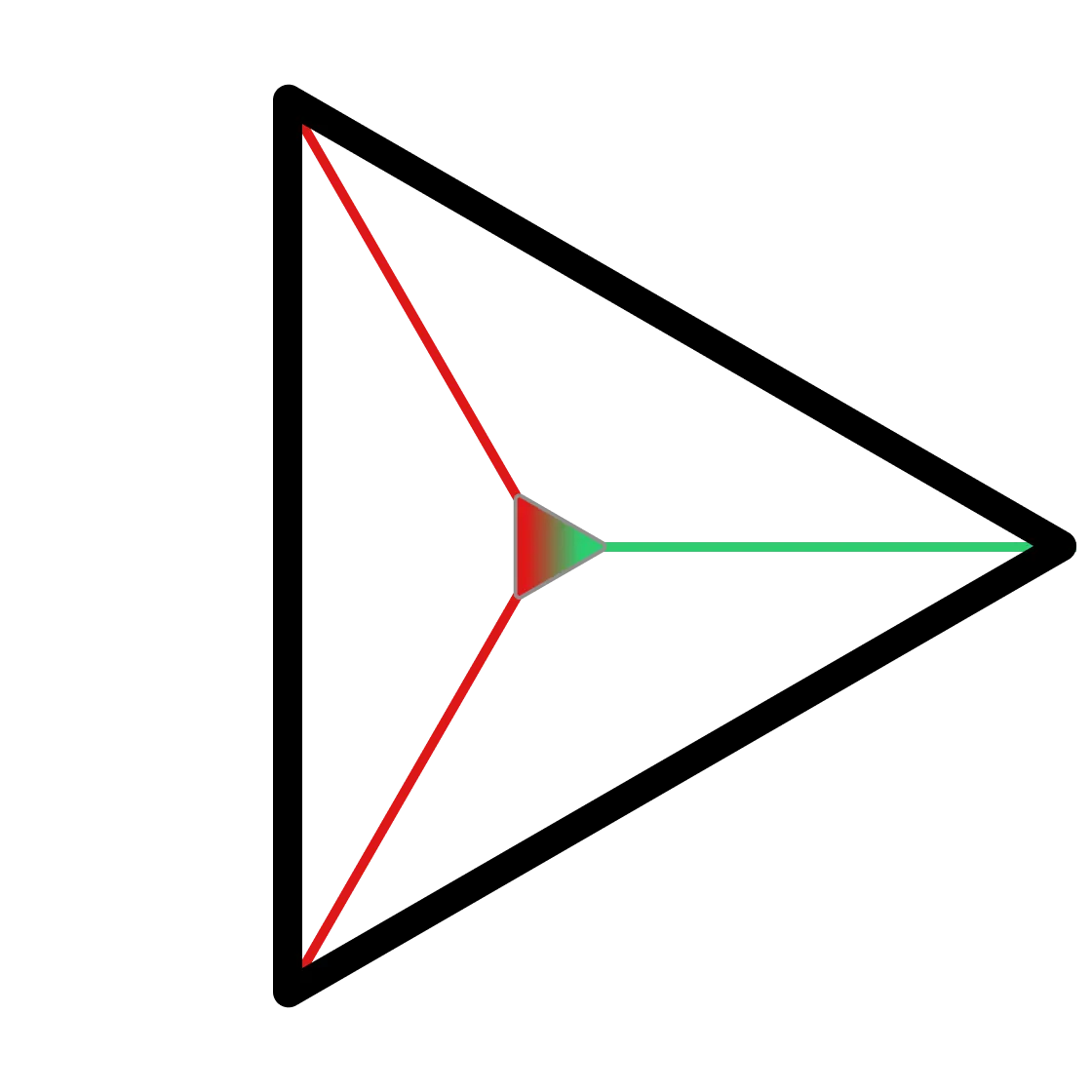



Our team identified the hypothesis: if we could monitor these branch structures continuously — tracking code changes and correlating them to active reliability incidents in real time — we could build a system that automatically surfaced root causes. Not after the fact. In the moment.
Idea
A platform that diagnoses itself.
I owned the full product lifecycle. I began with market research, studying how peer organizations at other major technology companies approached reliability at scale, and mapping internal services that addressed adjacent use cases. Customer discovery followed — deep qualitative work to understand how engineers actually experienced incidents: what they needed to know, when they needed to know it, and what the cost of uncertainty looked like in practice.
From that foundation, I synthesized a generalized product roadmap and a complete set of product and engineering requirements. I contributed directly to the technical architecture, and designed our data strategy for training a supervised learning model — including data collection, cleaning, labeling, validation, and the creation of in-production feedback loops to improve accuracy over time.
The model's predictions needed to live where engineers already worked, not in a separate tool they'd have to adopt. I led the UI/UX integration into existing Pull Request and Bug workflows, monitoring dashboards, and deployment surfaces — so the insight surfaced at the moment of highest relevance.
I also ensured the underlying API was designed for extensibility, enabling other internal teams across the company to build on top of the platform's core intelligence.
Leading a cross-functional team of engineers, designers, and data scientists, I took the product from concept through MVP to production launch. The go-to-market strategy centered on a keynote series, targeted email campaigns, and an internal advertisement — converting over 7,000 customers across 20+ Windows teams.
Impact
Reliability, at the speed of change.
After a full year in production, the results were unambiguous. Windows reliability incidents fell by 12% overall. The time to identify root causes dropped by 34%.
The $6M in annual support costs saved was the measurable surface of something harder to quantify: engineers getting hours of their day back, incidents that didn't cascade, and customers who never knew there was a problem to begin with.
A platform that once relied on human memory and manual correlation learned, instead, to read its own signals.